When strategic competition and rivalry between China and the United States are discussed in Japan, the discussion often assumes Beijing and Washington are the only relevant actors. However, neither China nor the United States is monolithic. America in particular is a federal country, and each state has a strong sense of independence and a different perspective on China.
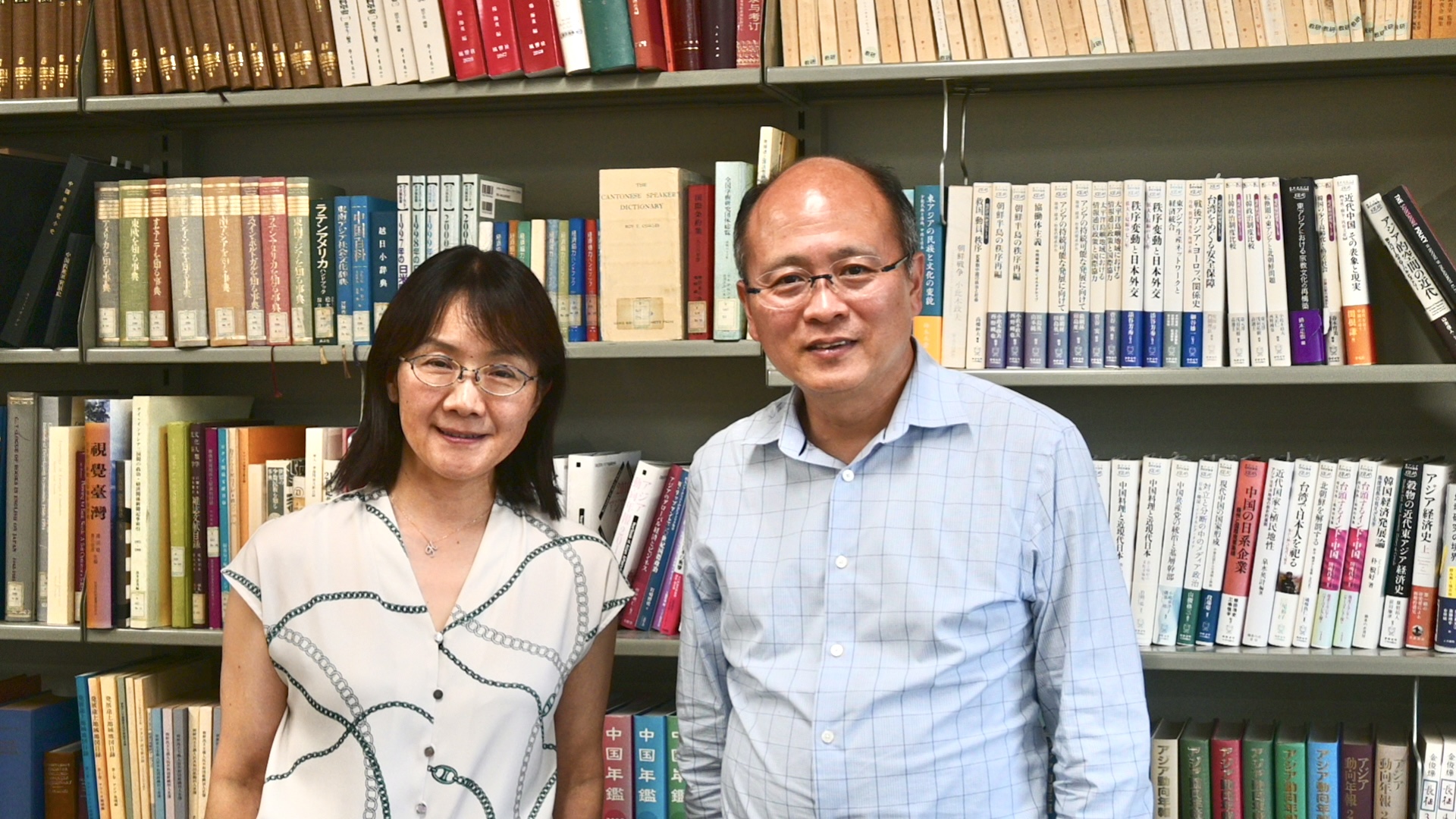
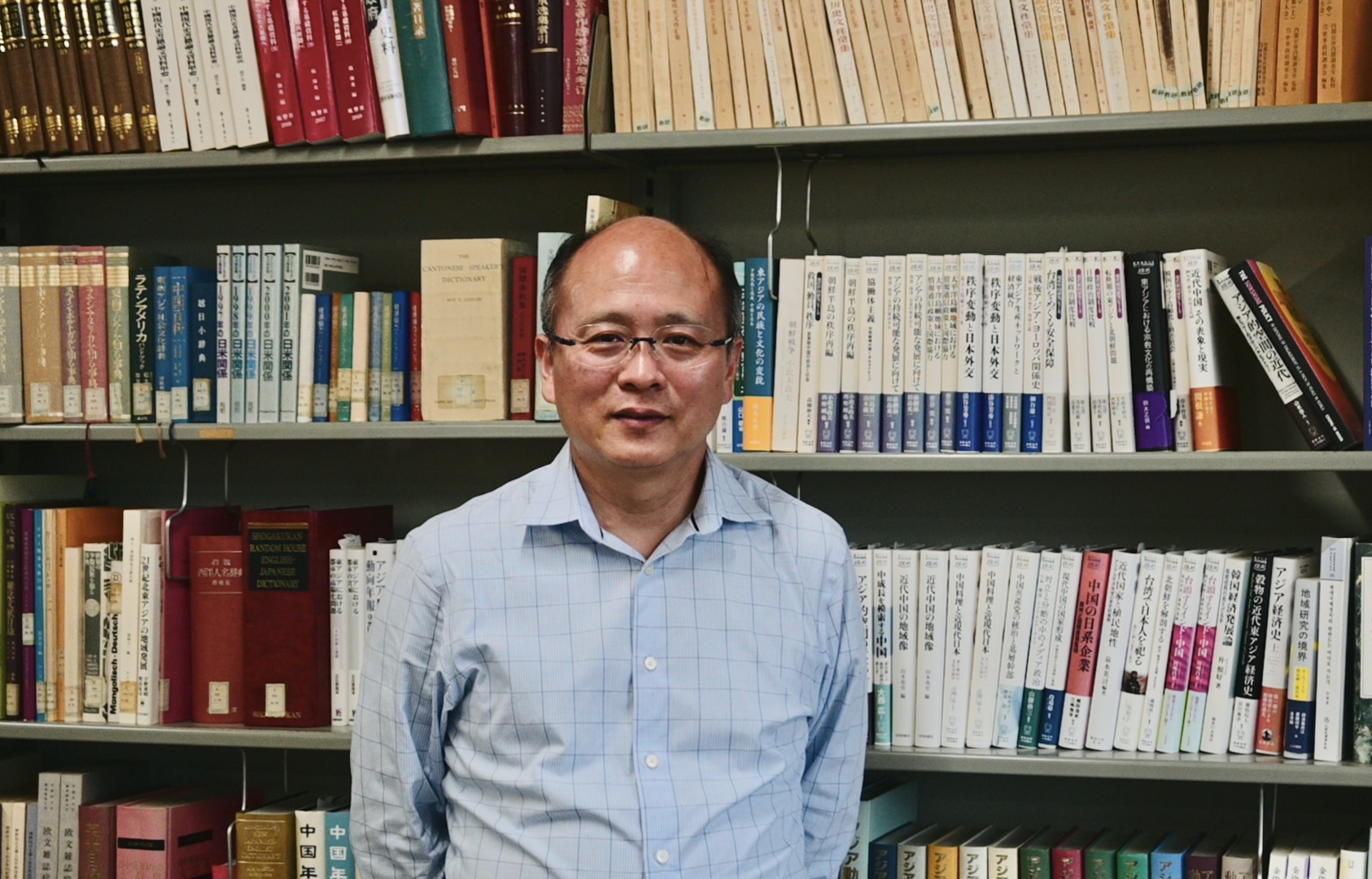
For this interview, we spoke with Professor Hiroki Takeuchi, who teaches at Southern Methodist University (SMU) in Dallas, Texas, about China-Japan-U.S. relations from the perspective of Dallas, the current state of the Chinese economy, and narratives surrounding China.
China-Japan-U.S. Relations from the Perspective of Dallas
Kojima How do you see the current China-Japan-U.S. relationship from Dallas?
Takeuchi China, Japan, and the United States have economic interdependence through the international division of labor across production stages known as global value chains (GVCs). However, the effects of GVCs on each bilateral relationship is different.
Simply put, Japan-U.S. relations are stable, while China-Japan and China-U.S. relations are unstable. Economic interdependence based on GVCs forms the foundation of stable Japan-U.S. relations. Even when there is some friction, foreign direct investment (FDI) by Japanese companies in the United States provides resilience to the bilateral relationship. Regarding China-Japan relations, although China also benefits from Japanese FDI, China has “weaponized” the economic interdependence, as seen in the recent restrictions on exports to Japan of dual-use goods, including rare-earth minerals. Likewise, economic ties form the basis of China-U.S. relations, but the bilateral relationship’s nature differs greatly from that of Japan-U.S. relations. America relies on China for supplies of rare-earth minerals, for which alternative sources are difficult to find, while also relying on China as an export market for soybeans and other agricultural products, for which China can easily find alternative suppliers. This makes the relationship extremely vulnerable to China’s weaponization of the economic interdependence.
Overall, Japan and the United States have a sound interdependence; meanwhile, the China-U.S. interdependence is not sound, because political confrontation and economic friction are prone to reinforcing each other. China and Japan have even more difficulty maintaining sound relations because their bilateral relationship involves many contentious issues other than security and economic matters.
Takeuchi In Texas, Japan has been the country that has created the most jobs by FDI over the past ten years. In the Dallas-Fort Worth (DFW) metroplex alone, Toyota moved its North American headquarters in 2017 from Torrance, a suburb of Los Angeles, California, to Plano, a suburb of Dallas, while major Japanese companies such as Fujitsu, NEC, and ORIX have also located their headquarters in DFW for many years. More recently, with the DFW real estate market booming, Daiwa House and Sumitomo Forestry have also moved their headquarters to DFW.
Moreover, Daikin’s North American headquarters and main production base are in Houston. U.S. headquarters of Satake, whose rice milling machines have an overwhelming share of the market both in Japan and overseas, has its headquarters in Houston, too. Nippon Steel, which has recently drawn attention for its acquisition of U.S. Steel, also had its U.S. headquarters in Houston until it recently moved to Pittsburgh, Pennsylvania, where U.S. Steel’s headquarters are located.
Among Chinese companies, Huawei has its U.S. headquarters in Plano. However, while Toyota’s North American headquarters in Plano employs about 6,000 people including contract workers, Huawei only employs several hundreds of people across the entire United States. Their business models differ, and without creating jobs, it is difficult to gain local support.
Japanese companies have taken a similar approach in China and built close relationships with local elites. However, China is a centralized country, and it is authoritarian rather than democratic. Thus, it is difficult for subnational governments to confront the central government. That is why GVC-based interdependence has not led to stable China-Japan relations.
Kojima Does that business-first attitude also affect how people view China?
Takeuchi I think so. Dallas has both moderate Republicans and moderate Democrats, and what they share is a “Texas economy first” outlook. So when Trump moved to repeal NAFTA, they united and spoke out. I see that as the Texas style of dokuritsu jison. During Trump’s first term, I often said: “If you want to see someone complaining about their own party’s president, you should come to Dallas.”
They also take a sober view of the risks of doing business with China as China is an authoritarian state. Many view that America’s “engagement” policy with China has failed, but it is also true that American companies have benefited enormously from their enterprises with China. Although business people in Dallas are critical of preferential treatment for state-owned enterprises (SOEs) in China that undermines the functionality of the market economy, I think, they have accepted the concept known in political science as the “commercial peace,” which posits that economic interdependence brings stability and peace to international relations.

The Current State of the Chinese Economy—The Xi Jinping Administration’s Neglect of the Market Economy
How, then, should we understand the current Chinese economy? Takeuchi points out that the Xi Jinping administration’s economic policy does not give sufficient weight to the market economy, and that behind this lies a structural problem particular to authoritarian states: they are compelled to prioritize the resilience of one-party rule over getting economic policy right.
Takeuchi In my view, as shown by the 15th Five-Year Plan (2026–30), adopted at the Fourth Plenary Session of the 20th Central Committee of the Chinese Communist Party (CCP) last October, the Xi administration is moving from a private-sector-led economy toward a state-sector-led economy. At the Third Plenary Session held in July 2024, it also reaffirmed a policy of making SOEs a pillar of growth while the policy of opening to the global economy is only a “basic state policy.” The Xi administration appears to be turning away from SOE reform and prioritizing political control over economic efficiency. At the root of this is the ultimate goal of maintaining one-party rule. The Xi administration has strengthened CCP leadership in every field. Economic policy is no exception. If something seems inconsistent with maintaining one-party rule, China will not hesitate to sacrifice economic efficiency.
If economic growth alone were the concern, it would be more efficient to advance SOE reform and develop the private economy. China has repeatedly declared its opposition to protectionism and has shown an interest in sitting at the driver’s seat of the international economic order, by, for example, applying to join the TPP. However, SOE reform is indispensable for that. The current stance of the Xi administration makes me question whether China has the capacity to lead the international order.
Kojima There is certainly no doubt that maintaining one-party rule is the highest priority for the CCP regime. However, the CCP has already controlled the core institutions of the state, including personnel, information and ideology, the judiciary, and public security. The political scandals that occurred toward the end of the Hu Jintao administration—the Bo Xilai affair and the Zhou Yongkang affair—were certainly crises for the regime, but it weathered them by taking measures on many fronts, including institutional and personnel responses, the Anti-Corruption Campaign, and controls on speech. Given that situation, couldn’t the CCP maintain one-party rule even while expanding the space for the private economy to develop?
Takeuchi In theory, yes. Barry Naughton, an expert on the Chinese economy and professor emeritus at the University of California at San Diego examines why the Xi administration abandoned market-oriented reforms in an essay titled “A Perspective on Chinese Economics: What Have We Learned? What Did We Fail to Anticipate?” published in the book Engaging China: Fifty Years of Sino-American Relations. Given that Xi himself knew that marketization had brought about economic development, we expected that he would continue SOE reform once he become president. Naughton’s analysis concludes, however, that Xi thought that the economy had developed sufficiently, so from now on China should prioritize political control over economic efficiency.
In addition, authoritarian systems face the problem that “information uncertainty” distorts a leader’s calculations. People around the leader try to anticipate the leader’s wishes and only tell the leader what the leader wants to hear, so accurate information does not reach the top. Leaders of authoritarian systems are lonely. They themselves know that they are not receiving accurate information, and they therefore tend to fall into the mindset that “it will be dangerous unless I impose more control.” In other words, they are prone to be paranoid. Once a leader becomes paranoid, the leader becomes even more vulnerable to “information uncertainty.” In the context of Chinese politics, the grip of paranoia may result in stronger state control than necessary.
In Xi’s case, however, paranoia alone may not be responsible. Toward the end of the Hu administration, collective leadership had gone too far and Party control was no longer effective. Cheng Li, a professor at the University of Hong Kong who has studied Chinese elite politics for many years, analyzes that Xi believed that “if we continue this loose governance and marketization, the regime will collapse,” and therefore Xi decided to steer in the opposite direction. Li himself has said in an interview with the Financial Times that if the Hu administration had continued in that form, one-party rule would sooner or later have become unsustainable. It would not be surprising if Xi genuinely believed that.
Kojima One of the factors behind the Xi administration’s strengthening of state-led economic management was a strong motivation to acquire, within a short period, advanced technologies that form the foundation of military security and economic development. On the one hand, this succeeded and contributed to strengthening China’s national power, but on the other hand, the concentration of subsidies in priority industries such as electric vehicles, solar panels, and lithium batteries brought about excessive competition known as “involution” (neijuan) and a deterioration in economic efficiency. In recent years, the central government has repeatedly instructed that disorderly subsidy competition be brought under control, but localities have their own vested-interest networks and do not move as the center wishes. A similar pattern can be seen in lending to private companies, where financial institutions on the ground do not respond to appeals from the central government. Could the Xi administration’s economic management also be affected by the fact that, despite the authoritarian system, central power cannot necessarily compel localities and lower levels to comply?
Takeuchi We should take China’s size into account. In China’s one-party rule system, the CCP directs and manages the entire enormous bureaucracy. The Hu administration moved in the direction of separating the Party from the government and the politics from the economy, whereas the Xi administration has rapidly advanced the integration of the Party and the government, and of the politics and the economy. The principle that the CCP leads all the organizations has not changed from the past, but under this kind of governance system, the size of the country becomes an obstacle to lower-level organizations effectively implementing the orders and instructions of higher-level organizations.
However, the starting point of these problems still stems from the fact that China is a country with an authoritarian regime. Local governments and interest groups forming vested-interest networks and resisting reforms, and conversely trying to anticipate the wishes of the central government or Party leaders, are behaviors seen in both authoritarian and democratic regimes. In a democracy, however, there are at least some mechanisms through which politicians, who are evaluated by voters through elections, confront the bureaucracy or balance the interests of local constituents against deference to the central government. Overall, policy modification based on economic rationality is more difficult when public opinion does not matter. In Japan, reforms such as postal privatization under the Koizumi administration were able to cut into vested-interest networks in which the bureaucracy, interest groups, and “tribe politicians” (zoku giin) were colluding with each other. That kind of reform would be difficult to expect under China’s one-party rule system.
Kojima The current Chinese economy has both bright sides, such as the space industry and information technology, and dark sides, such as the real estate slump, excessive competition, and strained local government finances. Looking at the economic statistics for April to June this year, released only recently, real GDP growth was +4.3% year on year and total retail sales of consumer goods were +1.3%, so the economy is clearly dependent on exports. How is this kind of economic situation in China being discussed in the United States?
Takeuchi In the United States, the Xi administration’s narrative that “SOEs are the center of the Chinese economy” is repeatedly emphasized, and the story that dominates is that China supports SOEs with subsidies, floods the world with products exported from China, crowds out industries in other countries, and seeks to dominate the world economy. In reality, many statements by the CCP and the central government are intended for domestic audiences to promote the regime’s legitimacy and the leader’s authority in. But because China is a dictatorship, people tend to assume that anything “dictator Xi” says will be realized as policy.
In a democratic system, legitimacy is questioned only at election time, but in an authoritarian system the leader must confirm every day that the power base is not wavering. To do that, the leader has to keep proving that he is a great leader. Xi has to keep saying grandiose things such as the “great rejuvenation of the Chinese nation” (Zhonghua minzu weida fuxing), beause China is an authoritarian country. Because he was not chosen through an election, he has to keep winning power struggles at all times or risk being caught off guard.
The same is true of the Belt and Road Initiative (BRI). When Xi launched it in 2013, he included existing investment projects in developing countries that had started during the Hu administration and made the overarching BRI concept as an afterthought, which allowed Xi to turn that into a storyline presenting them as his own achievement. Unless we keep in mind that Xi’s grandiose rhetoric is aimed at a domestic audience, the fear of China plotting to dominate the world can take on a life of its own.
Partisan conflict has become severe in the United States in recent years, but the “China threat” theory is one of the few issues on which there is bipartisan consensus. China-U.S. relations rapidly became confrontational from around the time Xi became General Secretary of the CCP in the autumn of 2012, and the start of the second Obama administration. Now, in Washington, politicians compete over who takes the harder line on China. China, meanwhile, argues that the U.S. hardline stance toward China is the root cause of China-U.S. confrontation. The conflict has become a blame game in which each side says, “You are the one at fault,” but because both countries’ foreign policies are rooted in domestic politics, this tendency is likely to continue.
Kojima It is true that the current 15th Five-Year Plan sets out a policy to “develop SOEs and state capital so they become stronger, better, and bigger, strengthen the core functions of SOEs, and improve their core competitiveness.” At the same time, it devotes considerable space to steadily implementing the Private Economy Promotion Law and ensuring the development of the private economy.
Takeuchi The important point is that a market economy is not something a government creates. GVCs have emerged because, when the internet spread in the 1990s, companies sought optimal solutions within the market economy; it was not because a government’s industrial policies promoted the formation of GVCs. Since “Made in China 2025” was announced in 2015, China has turned away from GVCs and focused on building its own supply chains. While industrial clustering has been agglomerated in priority fields such as robotics and aerospace, too many companies entered the market, producing intense competition and bringing about overproduction and price competition referred to as neijuan.
As a result, youth unemployment has now become a serious problem in China. Chinese authorities tentatively suspended publishing unemployment rates broken down by age group in 2023, but in the last release before the suspension, for June 2023, the unemployment rate for those aged 16 to 24 reached 21.3%. At the same time, China is also facing labor shortages as the working-age population declines due to the falling birthrate and aging population. Why, despite paucity of satisfactory jobs for young college graduates, is the government’s investment concentrated in information technology industries where ordinary college graduates cannot find good jobs? I think it is because the Xi administration prioritizes winning the competition with the United States for technological advancements over creating jobs. The message of “winning the competition with the United States” is useful to win power struggles in Chinese domestic politics. On the other hand, because the authoritarian leader does not have to win elections, Xi does not have to pay much attention to “jobs.”
China, Japan, and the United States all benefit from GVCs, but they approach the market economy differently. I would describe: China’s priority as “dominance” > “growth” > “distribution”; America’s as “growth” > “dominance” > “distribution”; and Japan’s as “distribution” > “growth” > “dominance.” For many years, “dominance” and “growth” were not contradictory goals for China, but as the economy matures, a contradiction is emerging between them. Under the Trump administration, “dominance” has come to the forefront in the United States and has become a source of friction in international relations. Japan has focused so much on “distribution” that its economy has stopped growing. Each country has its own problems, but behind them lies domestic politics.
What Role Is Required of Experts in an Era When “Narratives” Drive International Relations?
Finally, the discussion turned to narratives about China. Today, the internet is full of misinformation about China. How can we convey accurate and expert knowledge about China to policymakers and society?
Takeuchi We are now in the age of social media, and the weaponization of “words” is leading to the weaponization of “narratives.” Information spreads in the form of short, easy-to-understand stories. But because the real world is complex, simple stories are often liable to cause misunderstanding and misperception. Precisely because we live in such an era, I think it is more important than ever to analyze how narratives are created and how they affect policymaking.
Kojima I agree. I also feel that in Japan, narratives created in the United States are often imported wearing the mantle of authority and used politically. A symbolic example is how remarks by Admiral Philip Davidson spread as the theory of a “2027 Taiwan contingency.”
Takeuchi In foreign policy decision-making, it is necessary to recognize that the other country has its own logic rooted in domestic politics, and that messages are often intended for homegrown audiences. The United States, however, tends not to learn from foreign countries, forgetting that other countries also have complex domestic politics. What worked when the United States led the world with a superpower’s magical power becomes problematic now that its relative power declines.
That said, successive American administrations have brought China experts into government, where they served as a check by encouraging policy management that took into account the context of China’s domestic politics. The Trump administration is a group of amateurs that excluded real experts, and I feel that this has removed that brake. However, because a bipartisan consensus has formed around taking a hard line toward China, I do not think this basic stance will change regardless of who becomes president in the future.
Recently, in both Japan and the United States, people at various levels who do not know China have increasingly come to speak about China. The spread of social media has encouraged this trend. People who are not China specialists tend to think that China’s leaders are always thinking about relations with the United States. By contrast, for people who understand Chinese politics, it is common knowledge that the most important thing for Xi is the stability of domestic politics. No matter what the U.S. president says, Xi will not be ousted from power. But if discontent among farmers, workers, or ethnic minorities leads to riots, or if Hong Kong protests grow out of control, that would undermine his power base and destabilize the regime. In other words, Xi has to respond to recurring domestic problems like playing a game of whack-a-mole. People who do not specialize in China probably do not understand this.
At the same time, China’s leaders need to speak with an awareness that grandiose rhetoric aimed at domestic audiences can cause misunderstanding and misperception. The image of a “leader confronting the American superpower” was helpful for Xi to score big points at home, but since Russia’s invasion of Ukraine began immediately following the Beijing Olympics in February 2022, his initial position of siding with Putin pulled China into an axis of confrontation framed as “the ‘Western camp’ versus the ‘China-Russia camp.’” It was as though playing with anti-American fire for the sake of a power struggle ended up causing a real fire.
In the age of social media, there are many “words” that are simply thrown out without proper thought, but sending a message without considering how the recipient will take it breaks basic rules and customs of communication. If those rules and customs are not followed, “words” become weaponized. When sending a message, Chinese leaders should take into account how words intended for domestic audiences will be received and interpreted by the international community. That is an obligation of a responsible superpower.
Kojima When we consider the use of expert knowledge in policymaking, it seems to me that one major difference between Japan and the United States is depth of the policy think tanks. Japanese policy think tanks lack their own system to train experts and researchers. In the meantime, many university professors are struggling with finding a balance between research and teaching. Thus, it is difficult to find time and energy for policy debates if you want to focus on your academic research.
Takeuchi It is true that, although there are exceptions such as the Wilson Center, U.S. policy think tanks continue to be very active even under the Trump administration thanks to abundant private funding. I’d propose that Japanese think tanks should steer toward greater internationalization. Fortunately, the number of foreigners who find Japan attractive has been increasing. Once they visit Japan, foreigners usually become fans of Japan. In the field of Chinese studies as well, bringing researchers to Japan from China and other countries would promote expert exchanges within Japanese research institutions and improve their research capacities.
The SMU Tower Center, where I am a fellow, co-hosted an international symposium this July titled “U.S.-Japan Relations and Regional International Orders: The Indo-Pacific, the Middle East, and Europe” with Institute of Geoeconomics (IOG) and the RCAST Open Laboratory for Emergence Strategies (ROLES) at the University of Tokyo’s Research Center for Advanced Science and Technology (RCAST). It is important to increase this kind of events and activities. Because communication methods were rapidly digitalized during the COVID-19 pandemic, I feel that combining online and in-person participation has made it easier to create more opportunities for people to “gather.” The internationalization of Haneda Airport and the spread of taxi apps have also been serving as a tail wind to inviting more foreign-based researchers to Japan.
As for the balance between research and education while keeping up with current issues and participating in policy debates, I think it is essential for social scientists to maintain their curiosity about social problems, and keep their antennae up as much as possible, while sharpening their sensitivity to the real world issues. On that basis, we should not stop thinking about how we can contribute to society as experts of social sciences. Some researchers may devote great effort to figuring out how not to spend time on teaching so that they can concentrate on writing papers. But generations inevitably change, and I believe it is our duty to guide and educate the students who will carry the next generation. One may perhaps contribute more to society by educating students than by publishing papers.
The people who will take the center stage in the world over the next quarter century are the generations born after the beginning of the 21st century, known as Generation Z and Generation Alpha. The next 25 years will be probably the age of AI (artificial intelligence), and hence normative questions such as “How should people and society, nations and the world, coexist?” will become important. Fortunately, the Generation Z students I interact with are highly sensitive to normative questions involving value judgments such as justice and equality, and they stimulate curiosity in me that I could never receive from interacting with AI. The answers are not easy to find, but through lively discussion, questioning ourselves and one another, and listening to each other’s perspectives, our understanding of people and society deepens. One might argue that with AI, professors no longer need research assistants, but I disagree. The mission of a social scientist is not just to write papers. While asking ourselves of how to contribute to society and what kind of people we want to become, we need to keep our antennae pointed in every direction and catch the signals that truly matter. To do that, we need to make the effort to keep up with current issues and participate in policy debates, while also engaging in research and education.
• Guest Profile
Share & Reference