ポッドキャスト

Podcast

A podcast that explores China from multiple perspectives through conversations with scholars and experts. Its central series, Reading China: Conversations with Authors on Questions and Perspectives, is accompanied by a range of other podcast programs.

Podcast Series

Reading China from Japan: Conversations with Authors on Books, Essays, and Ideas

Understanding China has become more difficult than ever. Information continues to proliferate, yet the range of what can be verified has not expanded accordingly. What we need is not simply more information, but a way of reading: one that cross-checks fragmentary and sometimes contradictory accounts, and distinguishes between what can be established and what remains unknown.

Reading China is a podcast that explores books and scholarly writings on China together with their authors. Each episode welcomes one author and uses a book or an article as a point of departure for a 20-minute conversation, examining the path of reading and reasoning that leads to its conclusions.

There are things we can see precisely because China is close to us—and things we may overlook for the same reason. From Japan, we read China.

Hosted by Tomoki Kamo, Professor at the Faculty of Policy Management, Keio University.

Browse Episodes

Latest Episodes

4 episodes

Reset
Reading Japan–China Economic Relations through Bicycles with Tetsuya Komagata
Economy

【Reading China】Reading Japan–China Economic Relations through Bicycles with Tetsuya Komagata

About 85 percent of bicycles sold in Japan are assembled in China. This share has remained remarkably stable over time, regardless of whether the yen appreciates or depreciates. In this episode, we welcome Professor Tetsuya Komagata of the Faculty of Economics at Keio University to discuss his book, Japan–China Economic Relations through Bicycles: Beyond COVID-19 (Kazankai Academy Shinsho, 2021). From the overall industrial picture that becomes visible through a product with relatively few components, to the structural realities that have made Japan dependent on China, what does the familiar bicycle reveal about the Japan–China economy? We explore the question through concrete episodes.

Tetsuya Komagata
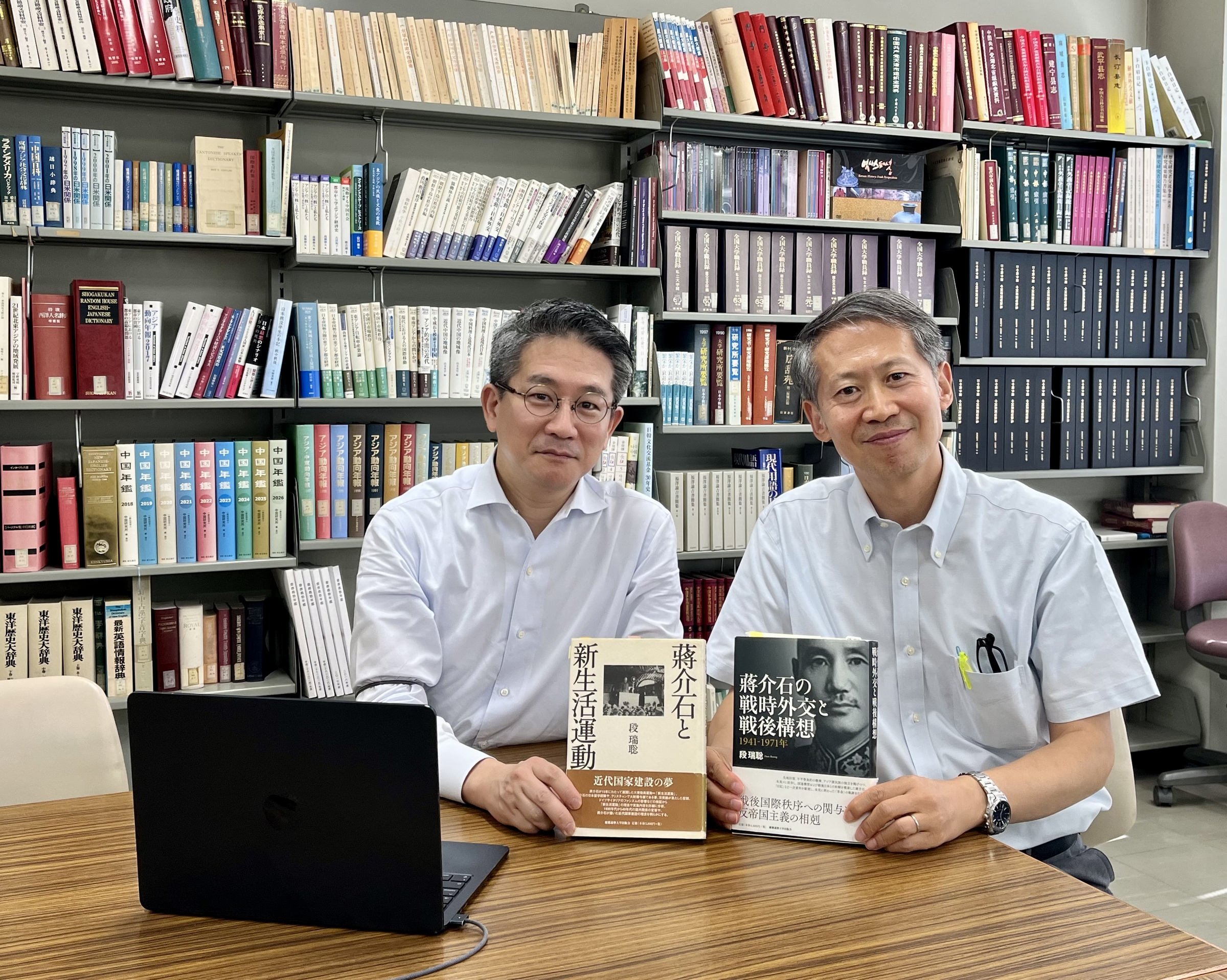
Reading Chiang Kai-shek and the New Life Movement and Chiang Kai-shek’s Wartime Diplomacy and Postwar Vision with Ruicong Duan
Politics

【Reading China】Reading Chiang Kai-shek and the New Life Movement and Chiang Kai-shek’s Wartime Diplomacy and Postwar Vision with Ruicong Duan

How should Chiang Kai-shek be described? A leader of resistance against Japan, an anti-communist leader, Japan’s “benefactor,” or Taiwan’s “authoritarian ruler”? Such labels have shifted markedly across time and place. In this episode, we welcome Professor Ruicong Duan of the Faculty of Business and Commerce at Keio University to discuss his books Chiang Kai-shek and the New Life Movement (Keio University Press, 2006) and Chiang Kai-shek’s Wartime Diplomacy and Postwar Vision, 1941–1971 (Keio University Press, 2021). We trace the origins of his research to a sense of déjà vu from his high-school years, consider the significance of the dates 1941 and 1971, revisit the question of continuity and rupture across 1949, and examine the unresolved issues of borders and territory. What can a renewed reading of Chiang Kai-shek contribute to our understanding of contemporary China? We explore these questions through concrete episodes.

Ruicong Duan
Reading A Global History of Chinese Cuisine with Kazuhiro Iwama
Culture and Society

【Reading China】Reading A Global History of Chinese Cuisine with Kazuhiro Iwama

Ramen and gyoza have become indispensable parts of the Japanese diet. Across Asia, meanwhile, Chinese dishes have been transformed into distinctive “national foods” in the societies that adopted them. In this episode, we welcome Professor Kazuhiro Iwama of the Faculty of Letters at Keio University to discuss his book A Global History of Chinese Cuisine: Beyond Culinary Nationalism (Keio University Press, 2021).

Kazuhiro Iwama